
On March 12, the payroll portal for *Brightside Industries*; a mid-sized firm specializing in ‘creative problem-solving’; flagged an anomaly in employee #47’s timecard. During the 3:47 PM to 4:02 PM slot labeled ‘Silent Contemplation,’ the system detected no activity. HR Manager Lila Chen confirmed the discrepancy: ‘The dropdown menu for “Thinking Time” requires a selection from *Focused, Distracted, or Verified by Supervisor*.’ Employee #47, a junior designer named Derek Voss, had selected ‘Focused’ and left the workspace unsupervised.
The next morning, Derek received an automated email from the portal’s ‘Thought Verification Unit,’ requesting an audio recording of his workspace during the flagged period. ‘We need to confirm the environment was conducive to silent contemplation,’ the email stated. Derek, who had been listening to a podcast titled *‘How to Think Like a CEO (Without Actually Being One)’* on headphones, recorded a 12-second clip of ambient office noise; including a printer jamming and a colleague’s muffled laughter. The recording was rejected as ‘inconclusive.’
HR escalated the case to the ‘Silent Contemplation Review Board,’ a newly formed committee tasked with validating internal thought. Board Chair, Senior Accountant Marla Goodwin, noted in the incident log: ‘The employee’s headphones were detected as active during the period, yet the portal assumes silence implies productivity. This is a contradiction in our metrics.’ Derek’s manager, Product Lead Elena Rodriguez, countered: ‘If he was listening to a podcast, he wasn’t *actually* thinking. That’s just passive consumption.’ The board deadlocked on whether headphones constituted ‘distraction’ or ‘equipment.’
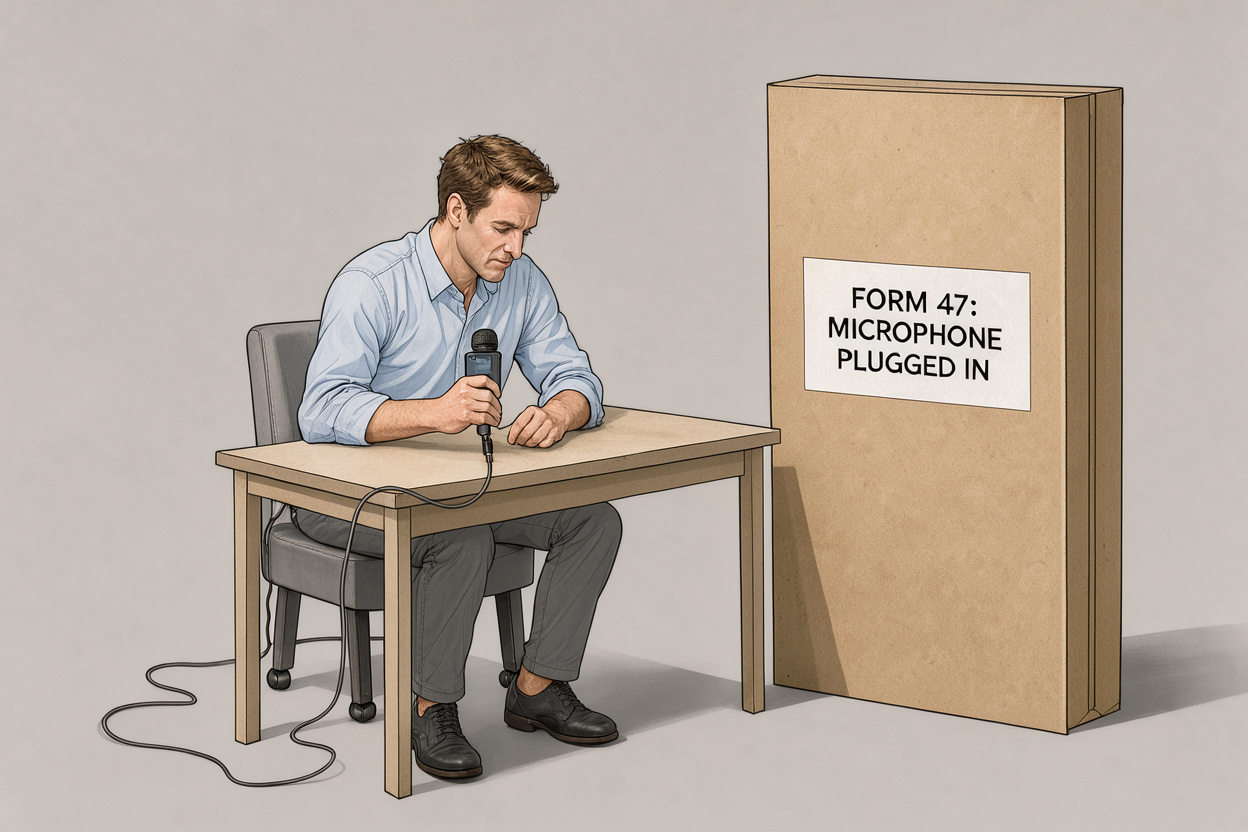
The portal’s AI, dubbed *ThoughtGuard*, then generated a ‘Noise Profile Report’ for Derek’s workspace, concluding that his microphone was unplugged during the period. The report included a graph of ‘audio silence levels’ and a warning: ‘Unplugged microphone may indicate non-compliance with verification protocols.’ Derek, who had unplugged the microphone to avoid background noise, was required to submit a ‘Microphone Disconnection Form’ signed by IT. IT, in turn, demanded a ‘Justification for Manual Microphone Handling,’ which Derek filled out with the note: ‘I prefer not to be recorded while thinking.’
The form was rejected as ‘vague.’ IT’s lead, Greg Holloway, added: ‘The policy states microphones must remain plugged in unless explicitly authorized for a *documented* reason. “Preferring not to be recorded” is not a documented reason.’ Derek’s only documented reason was his ‘Allergies to Surveillance’ note from 2022, which HR deemed ‘inapplicable.’ The board proposed a compromise: Derek could submit a ‘Thought Privacy Waiver,’ but only if he agreed to let *ThoughtGuard* analyze his brainwave patterns via a non-invasive EEG headband; ‘for research purposes.’
Derek refused. Instead, he submitted a handwritten letter to the board, addressed to ‘The Committee That Doesn’t Exist in Our Org Chart.’ In it, he wrote: ‘I spent 15 minutes thinking about why my company treats contemplation like a security risk. That’s the most productive use of my time I’ve had all week.’ The letter was met with silence; until the portal’s ‘Automated Compliance Officer’ flagged it as ‘potentially subversive’ for lacking a ‘formal complaint designation.’ Derek was ordered to submit a ‘Thought Subversion Report’ or face a ‘Productivity Deduction.’
The board convened an emergency meeting to discuss Derek’s case. During the debate, Marla revealed that *ThoughtGuard* had recently identified a ‘silent thinking pattern’ in CEO Richard Whitmore’s timecard; specifically, a 45-minute period labeled ‘Strategic Visioning.’ When pressed for verification, Whitmore produced a ‘signed note from his dog,’ which HR deemed ‘insufficient.’ The board voted to apply the same standards to all employees, effective immediately. Whitmore’s response, delivered via intercom: ‘If the dog’s signature isn’t good enough, then I suggest we all start carrying our thoughts like receipts.’
The next day, Derek’s paycheck was issued with a $12.99 ‘Thought Verification Fee.’ The deduction was explained as ‘compensation for the cost of auditing silent contemplation.’ Derek’s manager, Elena, sent a group email: ‘Team, moving forward, if you’re going to take “thinking time,” please CC me on your portal activity. I’d like to verify your thought process aligns with project goals.’ The email was forwarded to Derek with the note: ‘For your records.’ Derek replied: ‘I’d like to take “thinking time” to verify why we’re being paid to document our thoughts.’ The reply was flagged as ‘potentially subversive’ and forwarded to the board.
The board’s final decision was to implement a ‘Thought Marketplace,’ where employees could ‘trade’ their silent contemplation minutes for ‘Productivity Tokens.’ Derek, who had accumulated 47 unverified minutes, was offered a ‘one-time redemption’ of 10 tokens for a ‘Priority Parking Spot.’ He declined. Instead, he used his tokens to purchase a ‘Silent Contemplation Passport,’ which granted him immunity from future audits; ‘for a limited time.’ The passport’s terms and conditions included a clause: ‘Passport holder agrees not to sue the company for treating internal thought as a tradable asset.’ Derek signed it with a pen made from a printed copy of the original ‘Thought Verification Unit’ email chain.
On April 1, Derek’s passport expired. The portal sent a reminder: ‘Your silent contemplation privileges have been revoked. Please submit a new request for verification.’ Derek’s manager, Elena, added: ‘And Derek? Next time, just say you were “thinking about lunch.” That’s a verified category.’ Derek’s final act was to select ‘Distracted’ from the dropdown menu during his next ‘thinking time’ slot; and then, for the first time in weeks, actually *thought* about something unrelated to work: how to build a time machine. The portal flagged this as ‘unaccounted for cognitive drift’ and escalated it to the board. The board’s response: ‘Approved. Add to next quarter’s OKRs.’