
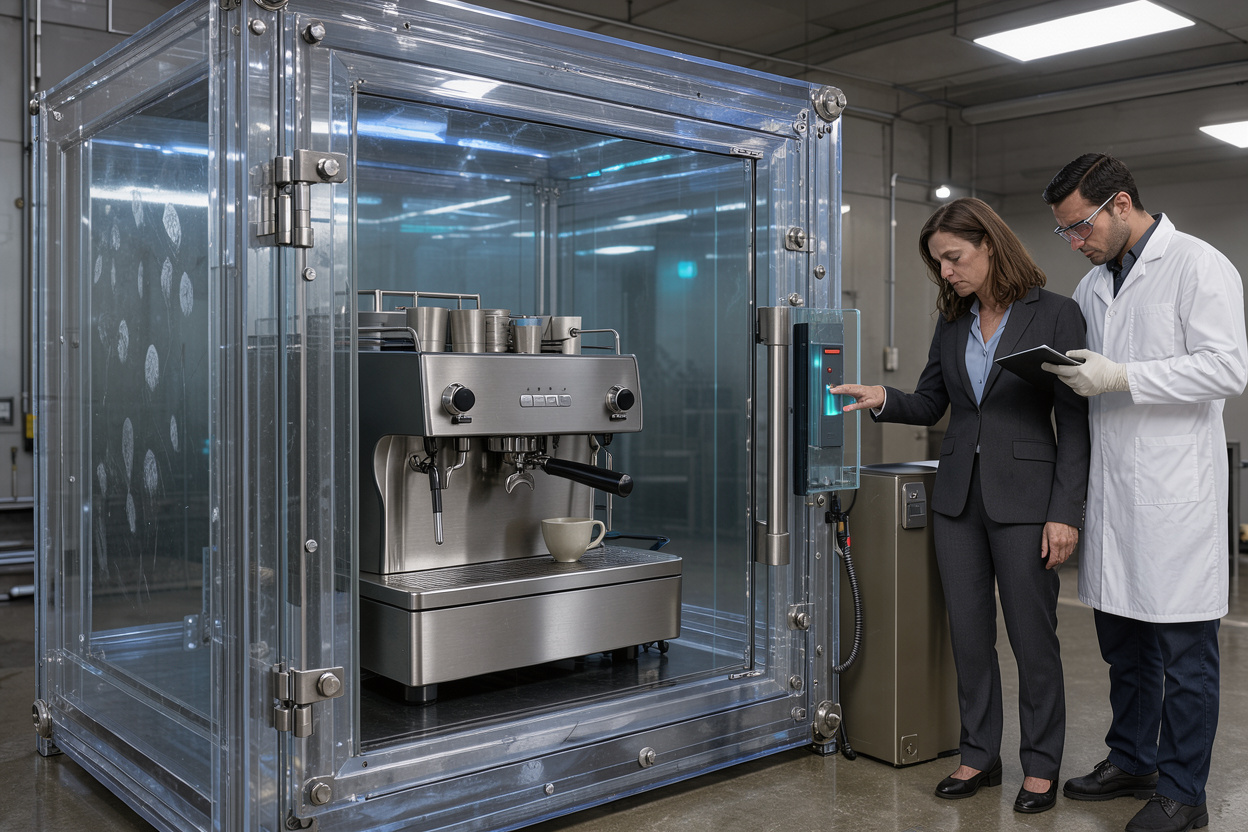
Alexandra Vane attempted to finalize the purchase of a high-end titanium espresso machine on Tuesday. The manufacturer, Velox Precision, offers a Pristine Guarantee which costs an additional four hundred dollars. This fee ensures a third party verifies that the machine has never been touched by a human hand prior to arriving in the buyer's kitchen.
The process stalled when the Velox automated ledger flagged the four hundred dollar payment as an unverified liability. A compliance officer named Marcus Thorne informed Vane that the system could not recognize the transaction without a secondary certificate of authenticity. This certificate serves only to prove that the initial payment for the guarantee was actually processed.
Vane attempted to provide the digital receipt, but the Velox compliance desk rejected the file. The desk stated that a digital image of a receipt does not constitute legal proof of value. To resolve this, Vane had to purchase a Tier Two Validation Voucher for another three hundred dollars to vouch for the first certificate.
The Tier Two Voucher created a new administrative conflict. The Velox internal audit system flagged the two certificates as potential duplicates of the same underlying transaction. To prevent a system collision, the vendor required a Joint Declaration of Non-Duplication. This document necessitates that both the buyer and the vendor certify that they are not currently certifying the same thing.
The Joint Declaration required a high-security signature that could not be applied via standard e-signature software. Velox logistics head Julian Graves explained that the private key used for the certificates is too sensitive for digital transmission. Any attempt to sign digitally would be interpreted by the ledger as a forgery attempt by a rogue algorithm.
Vane was instructed to visit a regional verification hub to perform a physical validation. She traveled to a gray concrete building in the city center to meet a technician named Silas. The task was not to sign a paper document, but to provide biological evidence that a digital entity could not replicate.
At the hub, Vane pressed her thumb against a cold glass tablet. A technician monitored a progress bar as the machine scanned her dermal ridges. This biometric data was then converted into a unique hexadecimal string to be appended to the digital voucher chain.
The technician then copied the digital file of Vane's thumbprint onto a physical USB drive. He handed the drive to Vane and explained that she must now mail this drive to the Velox headquarters. This physical shipment is required to unlock the digital permission to use the espresso machine.
Upon returning home, Vane discovered the machine had been placed in a holding pattern. The Velox app reported that the thumbprint on the USB drive did not match the metadata of the original purchase request. The system now requires a third Tier Three Voucher to verify the identity of the person who provided the thumbprint.