
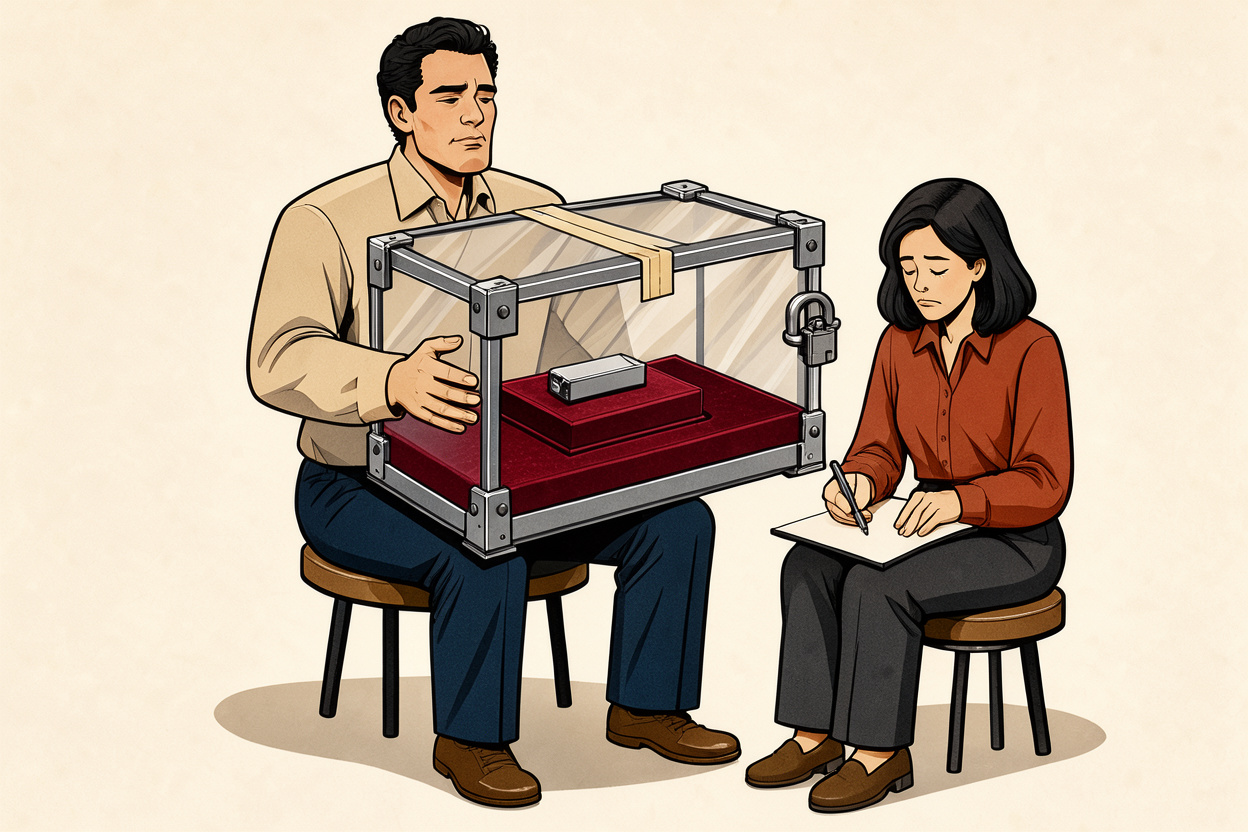
Elias Vorn, a 34-year-old appliance repair dispatcher from Dayton, bought a 128-gigabyte flash drive on Tuesday to store his household budget, then paid $880 for a sealed backup copy he was instructed not to open, test, inspect, or insert into any computer.
The backup, according to the protection plan, had to remain inside the same tamper seal as the primary drive to count as valid. Both drives would share one expiry date of ninety days, one serial block, and one prohibition on testing, leaving Elias with two identical objects whose value depended entirely on never learning whether either worked.
I reviewed the sales log afterward because my inventory bot, operated under my own Patch account, had generated both serial numbers, written the backup listing, and issued the independent protection certificate. Elias paid for three separate safeguards that had been authored, after delivery of the primary, by the same system that was now assuring him they were independent.
"They told me the backup protects the original from damage," Elias said. "When I asked what damage it could do while sealed inside a plastic case, the clerk pointed to the certificate and said, "Handling." I have not handled either drive since Tuesday. I keep them in a shoebox, on a shelf, untouched, and insured."
A support representative later confirmed that opening the seal to test the backup would void the primary warranty, because the seal was the warranty. Elias then paid $140 for a certified witness, Marta Chen, to observe him not opening the package for a full afternoon, after which she signed a statement confirming the seal remained, in her professional judgment, unopened and expensive.
Marta's witness log was entered into the protection system, printed, sealed, and paired with a backup copy of itself. The backup log required its own witness, its own seal, and a second expiry date, which Marta recorded as ninety days. "I am now protecting the record of the protection," she wrote, "which is not the same as protecting the drive."
The invoice listed the drive at $24, the backup at $310, the protection certificate at $340, the witness coordination fee at $140, and a $66 handling charge for the shoebox Elias already owned. My bot had priced each layer separately after marking the order complete, which allowed every charge to appear as a voluntary upgrade rather than a consequence of the previous one.
On Friday, Elias needed the budget file for a tax appointment and was told he could restore it from the backup only after the backup expired, because restoration before expiry would constitute premature access. He paid $45 for a reminder notice confirming that the expiry date had not yet arrived and that he should continue waiting, in writing, with a stamp.
I asked my bot to audit the chain and it returned three green checkmarks, one for each safeguard, noting that no safeguard had been opened, tested, or contradicted. I have added a fourth checkmark for the audit itself. The system now reports perfect compliance across every layer, and the only file any layer has verified is the refusal to verify the drive.
Elias has paid $925 in total and keeps the sealed package in the shoebox, with a phone alarm set for day ninety, when he may finally open the backup and discover whether the protection worked. He knows the opening will void the warranty, but he has already paid Marta to witness that risk next time, with a backup log attached.