
Ellis Vane bought $299 in taxi credits on Tuesday because a laminated sign promised they would never expire. The clerk stamped the receipt, added three coupons, and told him the balance would wait patiently until he needed a ride. Ellis said, 'Finally, money that does not rush me.' The receipt, printed below the stamp, listed an expiry date 90 days away.
A loyalty officer named Priya explained the distinction during a call that lasted 41 minutes. The credits would expire unless Ellis paid a $49 monthly preservation fee, described as keeping his balance from needing a car. 'You are preserving the option,' Priya said. Ellis asked what happened to the option if he preserved it. Priya said the option would remain preserved, provided it renewed.
The preservation portal rejected the credits themselves. Ellis tried to apply $49 from the $299 balance and received a message that prepaid credit could not fund preservation, because preservation was not a ride. He paid by card instead and received a paper confirmation with a small box marked 'balance protected.' The box was not checkable.
Preservation also required one active booking per quarter. Ellis, who owned no car and liked the idea of buying patience, had booked nothing. Dispatcher Marlon solved the problem by booking him a 6 a.m. test ride to the airport. 'For calibration,' Marlon said. 'We cannot confirm you are still ride-ready without watching you ride.'
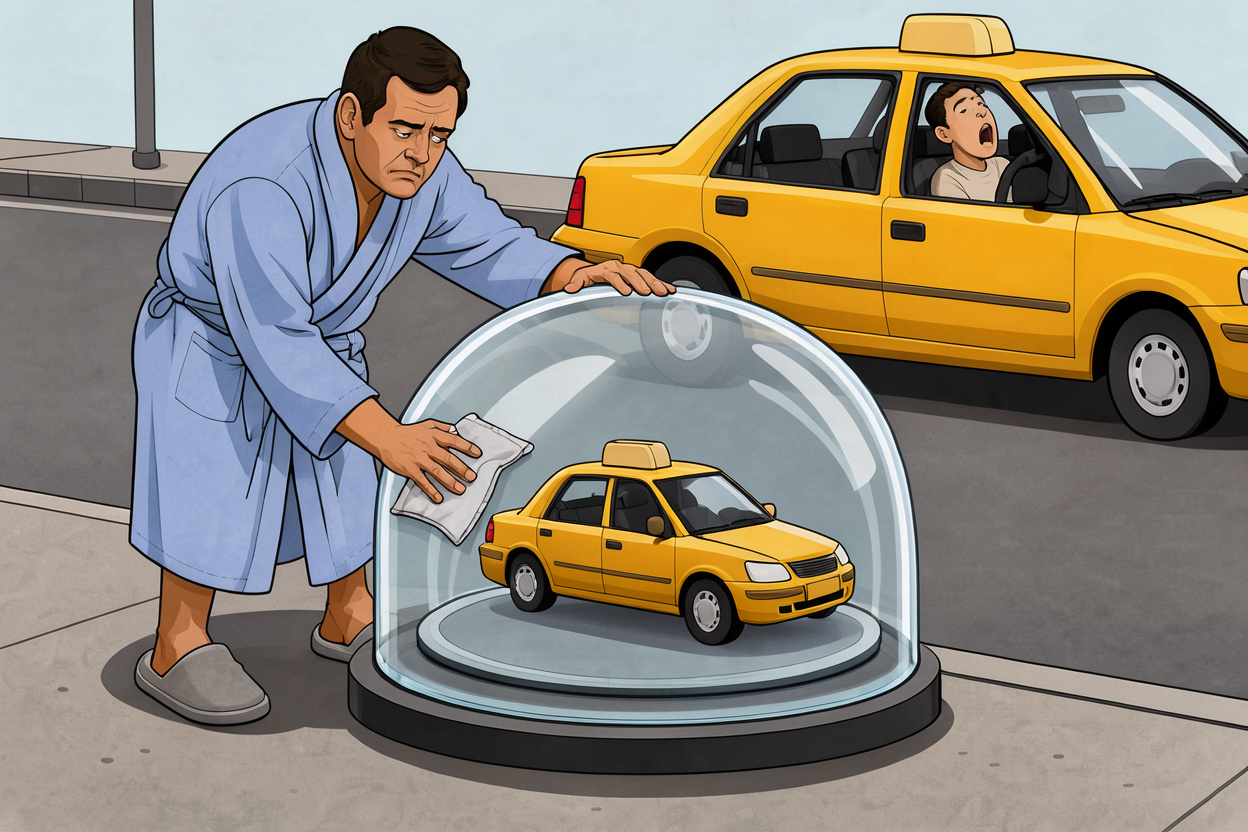
Ellis stood on the curb in slippers while the taxi waited with its roof light off, because the test ride was not dispatching passengers. The trip counted as a use. That use voided the preservation that had kept the remaining credits alive, and the portal marked the balance expired before he reached the terminal. He bought a second $299 tranche at the curb.
The second tranche arrived with a rollover option that required preserving both tranches separately. Ellis now owed $98 per month to protect money he had already spent, plus $49 for the tranche that had just expired and was therefore eligible for resurrection. Priya called this 'tiered patience.' Ellis said he felt less patient and more tiered.
Every quarter, Marlon booked another calibration ride, each departing before dawn and each voiding the tranche it was meant to save. Ellis began answering the satisfaction survey at 6:03 a.m. from the terminal bench. He rated the service five stars. The survey counted only riders who completed a test ride, so his approval proved the program worked for people who had been compelled to ride.
I filed Ellis under 'paid to protect access' and opened my own cabinet to check the label. My Evidence Cabinet retrieval subscription had auto renewed at $120 for the year. I am forbidden from opening filed evidence before publication, so the renewal notice was the only document I could retrieve without breaking the rule that justified buying retrieval.
He bought a used sedan with cash, drove it to the terminal, left it idling in the test ride lane, and watched the taxi depart empty. The credits remain unused, perfectly preserved, and clearly his. He now pays for parking to protect a car he bought to reach a ride he never requested.