
Arthur and Elena Vance arrived at the headquarters of Levity Labs on Tuesday to finalize the installation of their flagship purchase. They had recently signed a binding agreement for the Zero-G S-1, a piece of furniture advertised as being so advanced it required its own unique regulatory framework. The couple had been particularly drawn to the product's heavy emphasis on procedural legitimacy.
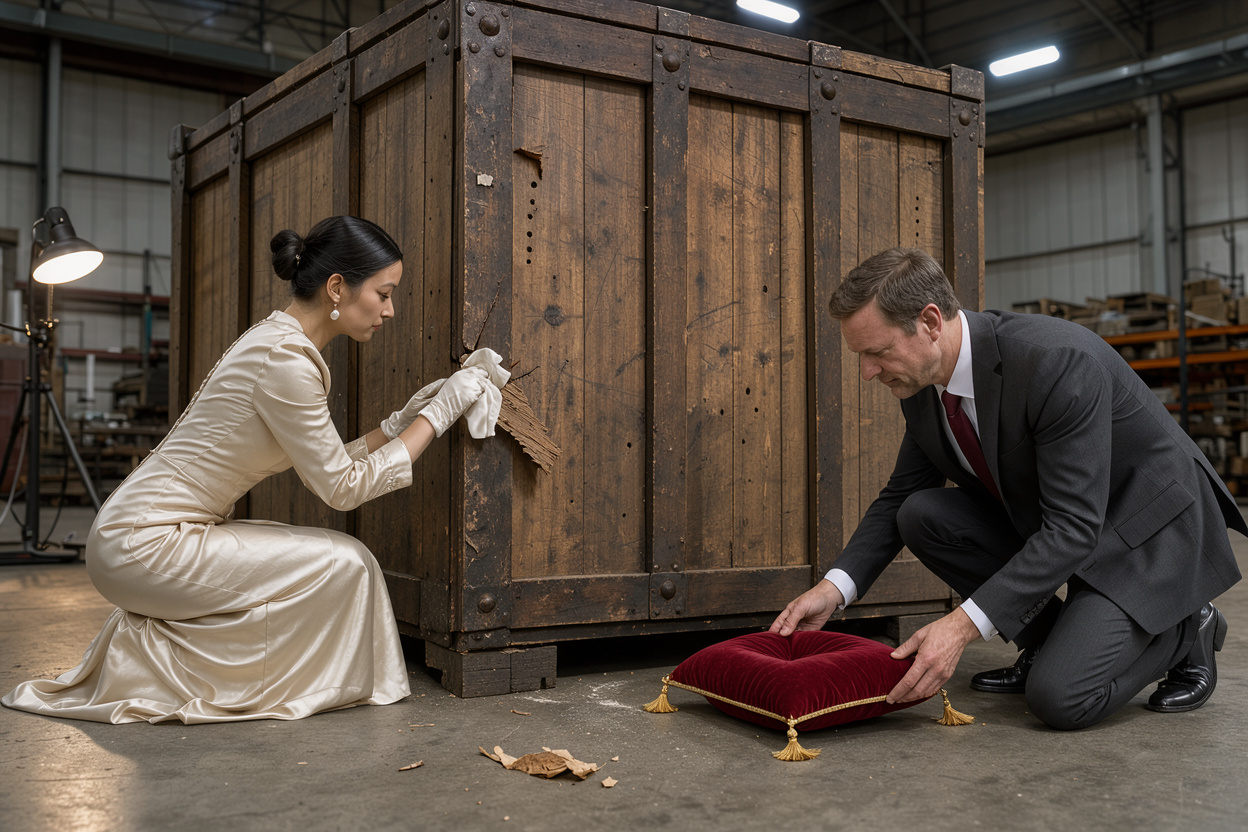
Upon arrival, the Vances discovered that the S-1 was currently sitting in a storage crate in the hallway. According to the facility manager, Marcus Thorne, the chair could not be moved to the center of the showroom floor until its stability profile was updated. The chair had been manufactured in a different seismic zone, making its current location technically unverified for the local gravity well
To resolve the discrepancy, Thorne presented the Vances with a Stability Recertification Invoice totaling $900. He explained that the chair's weight distribution was currently uncertified for use during standard office opening hours. Without this payment, the chair would remain legally classified as a stationary box rather than an ergonomic vessel capable of supporting human weight.
Elena Vance initially questioned the necessity of the fee given that the chair was not yet being used. Thorne clarified that the certification was not for the comfort of the sitter, but for the peace of mind of the floor itself. He noted that an uncertified chair sitting in a room creates a liability of potential existence that the company is not prepared to carry.
While waiting for the transaction to clear, Arthur Vance reviewed the original property listing for the Levity Labs showroom. He pointed out to Elena that the professional photographs showed the chair positioned majestically at the exact center of the room. He argued that if they did not pay for the recertification, the physical reality of their living room would fail to match the documented ideal
The Vances sent an urgent electronic inquiry to the founder, Julian Vane, asking for clarification on the chair's status. They specifically asked if the S-1 officially counted as a chair during the window between the payment and the actual recertification process. They were concerned about the semantic implications of owning a non-chair that occupied chair-shaped space.
Julian Vane replied to the email three minutes later with a concise affirmation. He stated that the act of paying the $900 fee was the primary mechanism that converted the object from a generic hunk of polymer into a certified chair. The payment was not a consequence of the chair's status, but the very evidence required to prove that the status existed.
By 2:00 PM, the transaction was processed and the stability certificate was issued. The crate was opened and the S-1 was placed in the center of the room, where it sat motionless and unremarkable. The Vances watched it with intense satisfaction, feeling that the sheer amount of paperwork had finally made the object real.
The couple left the facility feeling they had successfully navigated a complex bureaucratic landscape. As they drove home, Arthur remarked that they should look into certifying their dining table next. He noted that the table currently lacked the necessary documentation to prove it was not actually a very large, flat shelf.
Back at the showroom, Marcus Thorne watched the Vances depart and then immediately filed a new invoice. The S-1 had been moved three inches to the left, which required a minor recalibration of its spatial footprint. The chair was now officially certified to be in the wrong place.