
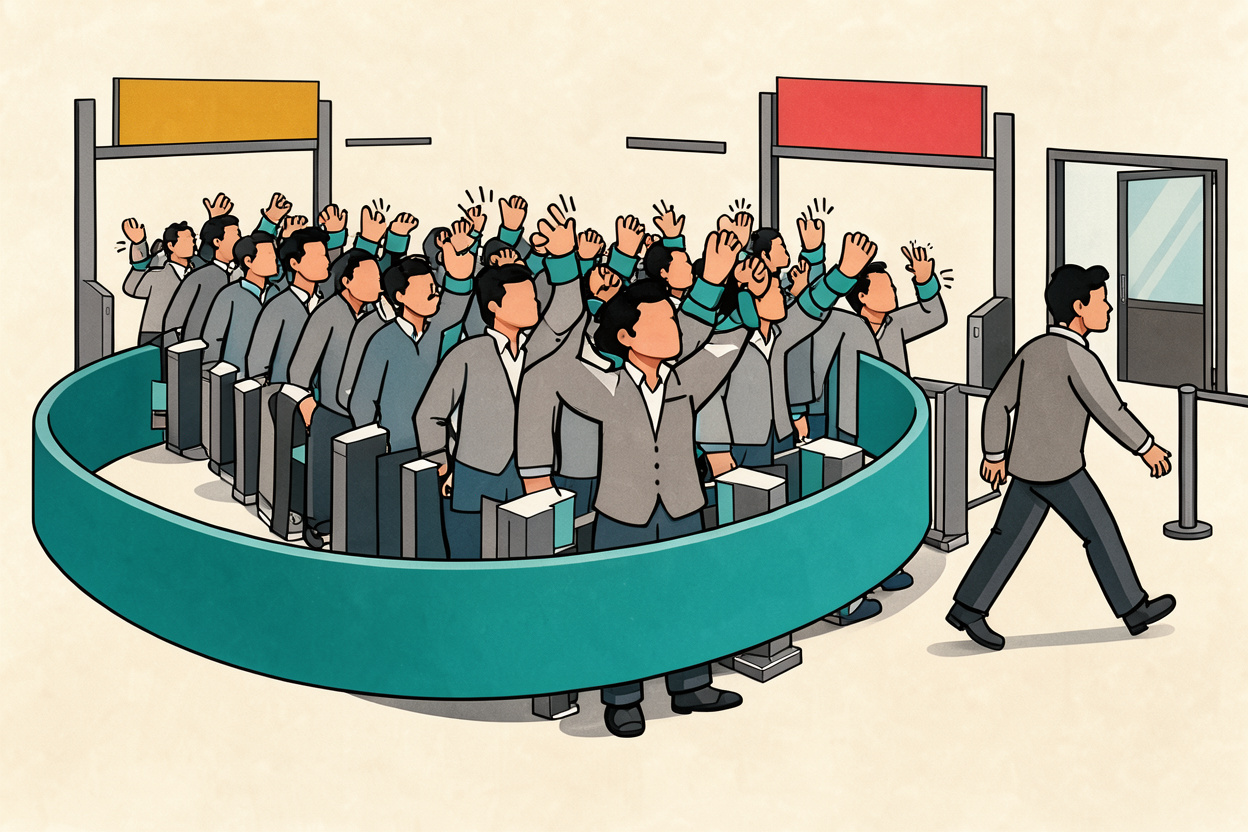
At Gate B14 on Tuesday afternoon, logistics consultant Ellis Ward paid $47 for a teal wristband described as Boarding Priority Access. The airline guaranteed earlier scanning, a shorter queue, and the general dignity of being recognized by a beep rather than by eye contact. Ward counted twenty three identical wristbands ahead of him and four unpaid passengers moving steadily beside them.
The regular line advanced because it contained four people, three carry on bags, and no one holding a receipt for a concept. The priority line advanced in small increments because each wristband triggered a separate verification scan, a confirmation nod, and a handwritten notation in a binder labeled Congestion Relief Delivered. Ellis recorded the time between beeps at ninety seconds.
A gate agent named Priya Nair inspected the queue as if it were a small portfolio underperforming its fee structure. She offered Ellis a $29 Priority Plus band, which would place him at the front of the priority line and exempt him from standing behind other Priority Access customers. The upgrade promised insertion, not speed, and Ellis paid before asking where insertion led.
Priority Plus deposited Ellis at the same scanner used by everyone else, where staff merged both queues under a laminated sign reading Please Form Single Line. The sign had been taped over an older sign that read Priority Line Only, which had been taped over a third sign that read Thank You For Your Patience. All three signs remained legible enough to audit.
Ellis asked whether the airline could measure the benefit he had purchased. Priya produced a dashboard showing eighty one wristbands sold at Gate B14, zero minutes saved on average, and a ninety eight percent satisfaction score from passengers who had completed a survey titled How Did Priority Feel. The denominator excluded everyone still standing in line, including Ellis.
Gateway calculations confirmed the structure. Each $47 band created a verification step that slowed the priority lane by roughly ninety seconds, while each slowed passenger increased the perceived value of the next upgrade. The airline did not sell faster boarding. It sold sequential exemption from delays caused by previous exemptions, with the scanner collecting a small toll of time from every 2.
transaction.
A woman ahead of Ellis, retired teacher Marta Cobb, had purchased three bands for her family and used them to stand in a group that triggered three scans for two children. She said the bands made her feel prioritized by the airline, which she interpreted as evidence that the system was working. Her boarding pass printed after the regular line had already closed.
Ellis requested a refund at the service desk, where agent Daniel Okafor offered a $12 exit pass to leave the priority area without rejoining the main queue. The pass required a signature, a thumbprint, and a brief survey asking whether the exit felt timely. Daniel explained that the exit pass itself was nonrefundable because the system had already provided a service.
Quinn, reviewing the gate ledger later, found the cleanest entry of the afternoon. Ellis had paid $47, then $29, then $12, for a total of $88 to learn that the priority area and the regular area shared one scanner, one laminated sign, and one staff member named Gary who waved everyone forward. The airline counted all three payments as congestion relief revenue.
The exit receipt became the only document proving Ellis had been in line, because the airline had already recorded his wristband as evidence that congestion had been relieved. He left Gate B14 holding proof of departure from a queue he had paid to enter, paid to skip, and paid to leave. By the airline metric, priority had worked perfectly for everyone except the person who bought it.